Shopify agent checkout: the second-order effect matters more than checkout itself
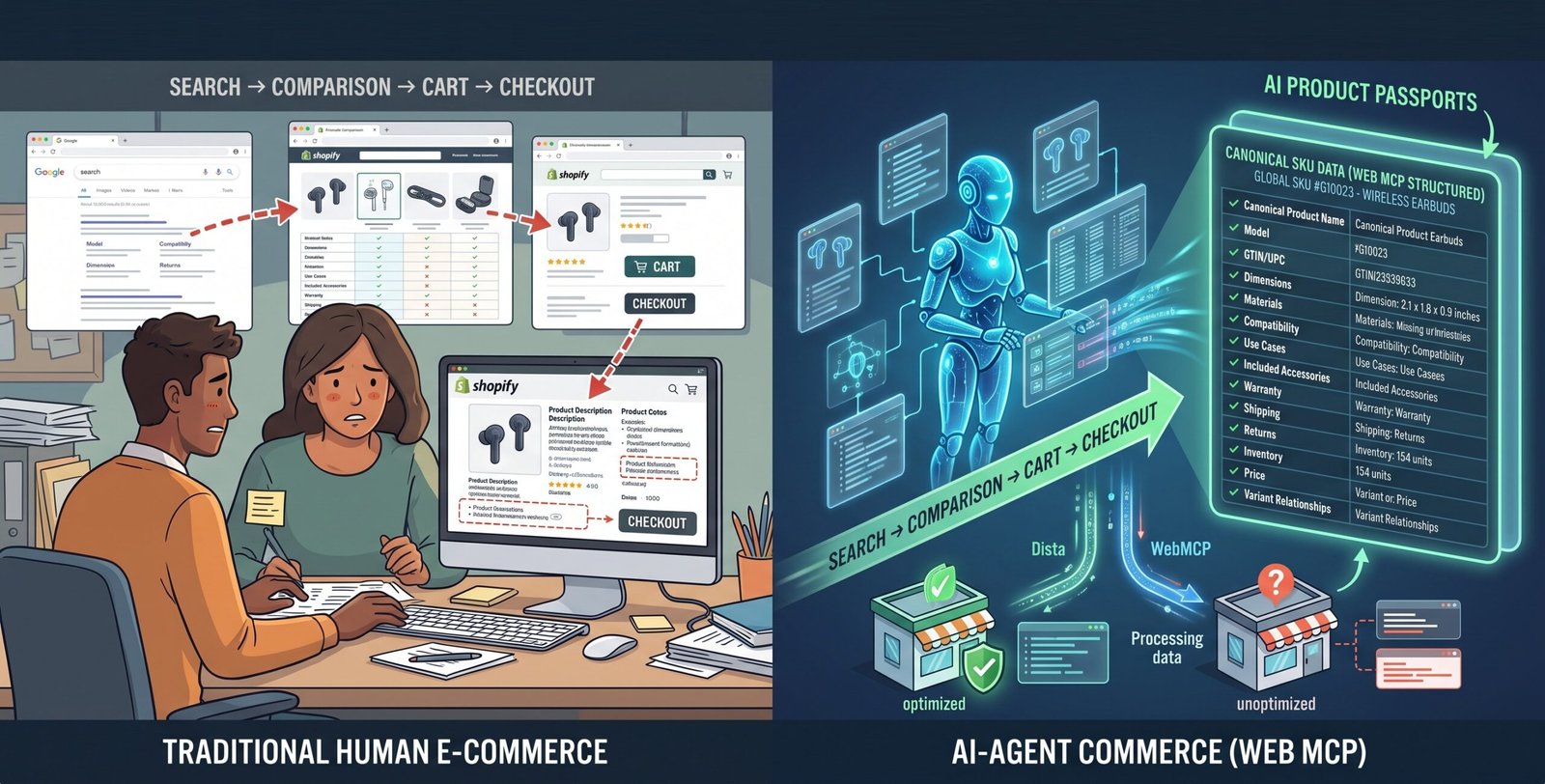
The checkout button isn’t the part of this story that should worry you. It’s everything that happens before an AI agent ever gets there.
Shopify now lets eligible browser based AI agents inspect checkout, update details like shipping, and submit an authorized purchase using structured WebMCP tools. The bigger implication for merchants isn’t the checkout mechanics themselves. It’s that once agents can handle the full path from search to purchase, product data quality becomes a competitive marketing asset, not a backend chore.
What Did Shopify Actually Change?
We covered the technical details earlier this week. Shopify’s expanded WebMCP support lets compatible browser based AI agents read checkout information, update supported fields such as shipping options, and complete an order once the shopper confirms it. The customer still approves the purchase. The agent just handles more of the legwork getting there.
Why Does the Second-Order Effect Matter More Than Checkout?
Because checkout was never the hard part. If an agent can eventually manage the whole sequence, from search to comparison to cart to checkout, then the competition shifts upstream. Merchants will increasingly compete on one simple question: how easily can a machine understand what you sell?
That reframes product data entirely. It stops being an operational detail IT handles once a quarter and becomes something closer to marketing infrastructure. A product an AI agent can’t fully understand is a product it’s less likely to recommend or successfully add to a cart, no matter how good the photography is.
What Is an AI Product Passport?
Think of it as the complete, structured profile that lets an AI agent confidently evaluate and transact on a product without guessing. For every SKU that matters to your business, that record should include the canonical product name, model number, GTIN or UPC, dimensions, materials, compatibility, use cases, included accessories, warranty terms, shipping details, return policy, current inventory, price, and variant relationships.
None of this is exotic. Most of it probably already exists somewhere in your systems. The problem is usually that it’s scattered, inconsistent, or incomplete, which works fine for a human who can tolerate ambiguity and fill in gaps by judgment. An AI agent has far less room to guess.
How Is This Different From Normal Product Feed Hygiene?
Good product feeds have always mattered for marketplaces and Google Shopping. What’s new is the stakes. A thin feed used to mean a weaker ad or a missed filter match. In an agent driven checkout flow, a thin feed can mean the agent either skips your product entirely or stalls partway through a transaction because it can’t confirm a detail like size, warranty, or return eligibility. A stalled or uncertain agent is far more likely to drop the product than a human shopper would be.
What Should Merchants Prioritize First?
Start with your highest volume and highest margin SKUs rather than trying to overhaul the entire catalog at once. For each one, confirm that the canonical identifiers are accurate and consistent across every channel, that dimensions and materials are stated explicitly rather than buried in an image or PDF, and that compatibility and use cases are spelled out rather than implied. Then check that policies an agent would need to confirm a purchase, like shipping timelines, return windows, and warranty terms, are clear and not contradicted somewhere else on your site.
Does This Replace Good Marketing Copy?
No. Persuasive, emotional product storytelling still matters for the humans approving the purchase. The product passport sits alongside that copy, not instead of it. The strongest listings will keep doing both jobs, telling a story for the shopper and stating facts for the agent acting on their behalf.
Key Takeaways
The headline here looks like a checkout feature. The real shift is that product data has quietly become a competitive battleground. Merchants who treat their catalog as a complete, machine readable passport for every important SKU will be easier for agents to understand, recommend, and transact on. Everyone else is betting that an AI agent will fill in the gaps correctly. It’s a bet worth not making.
Side Note:
What is an AI product passport?
It’s a complete, structured record of a product’s identifiers, specifications, compatibility, policies, and inventory, built so AI shopping agents can evaluate and transact on it without ambiguity.
Does Shopify’s agent checkout mean AI buys products without a human?
No. The shopper still confirms the purchase. The agent handles research, comparison, and preparing the checkout.
Why does product data quality matter more now?
Because agents handling the full shopping journey need explicit, structured information to recommend and complete a purchase confidently. Incomplete data increases the chance an agent skips the product or abandons the transaction.
Where should merchants start?
With their highest volume SKUs, checking that identifiers, specifications, and policies are complete, consistent, and stated explicitly rather than implied.