Selling on More Channels Is Easy. Managing the Inventory Behind Them Is the Hard Part.
For years, “multi-channel e-commerce” usually meant listing the same products on more places: Amazon, Walmart, Shopify, Best Buy and other marketplaces.
But as businesses expand, a bigger problem appears:
Where should the inventory actually live, and how should orders from all those channels be fulfilled?
Amazon’s expanding multi-channel fulfilment strategy illustrates this shift. Its fulfilment infrastructure can increasingly support orders originating outside the Amazon marketplace, including other commerce channels. This points toward a more modular model of e-commerce:
Shopify = Storefront
Amazon = Fulfilment
Google/Meta = Customer Acquisition
AI Assistants = Product Discovery
Walmart/Best Buy = Additional Sales Channels
The important idea is that these functions no longer have to live inside the same platform.
For sellers, that’s both an opportunity and an operational challenge.
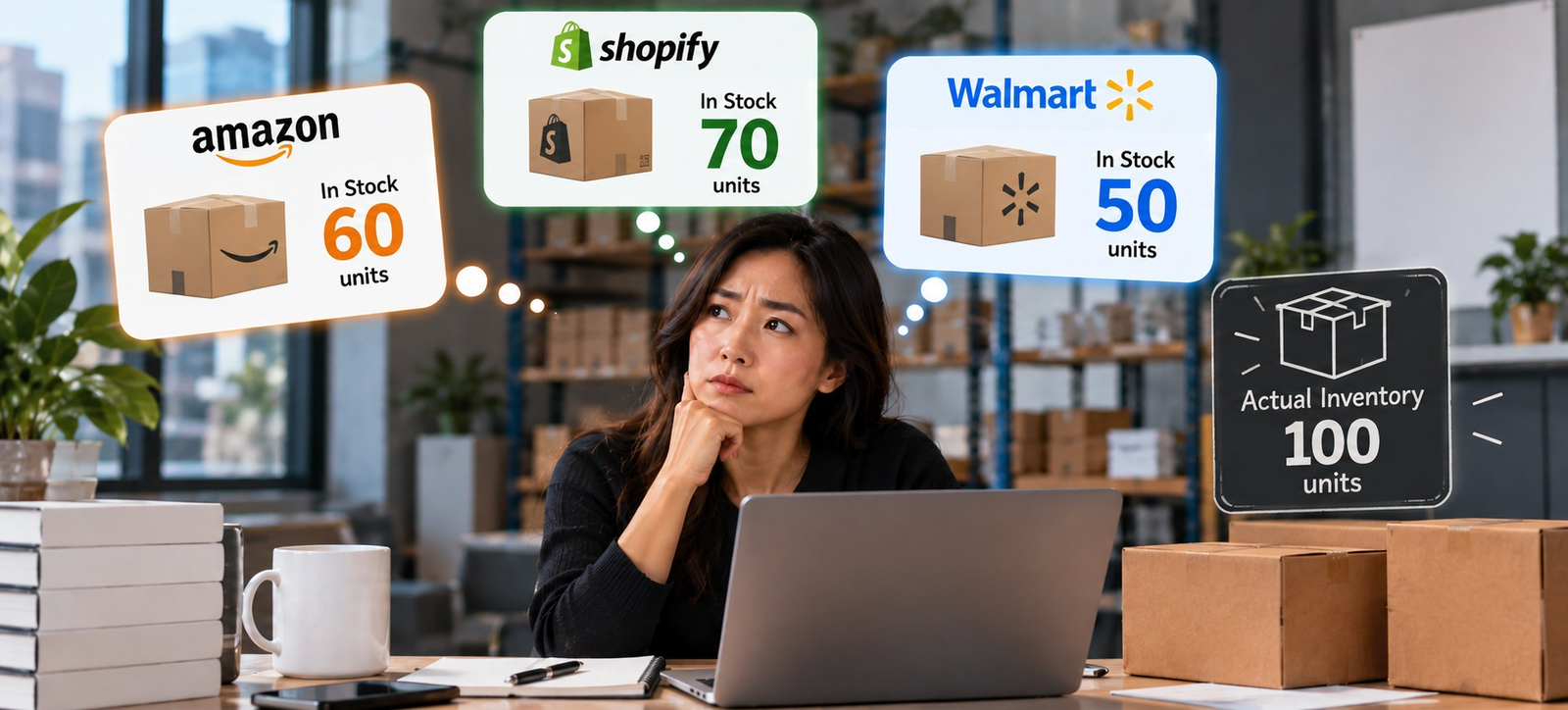
Imagine having 100 units of one product. If Amazon thinks 60 are available, Shopify shows 70 and Walmart shows 50, you don’t actually have 180 units. Without synchronized inventory, a successful promotion on one channel could suddenly create overselling everywhere else.
That’s why growing sellers need to think about multi-channel inventory architecture, not simply marketplace expansion.
A better structure looks like:
Central Inventory → Channel Allocation → Amazon / Walmart / Best Buy / Shopify → Order Routing → Fulfilment → Inventory Synchronization
The business needs one reliable answer to a simple question:
How many units can we actually sell right now?
It should also decide where orders should be fulfilled based on cost, speed, inventory location and channel requirements.
The future of e-commerce isn’t necessarily operating five separate stores. It’s building one commerce operation capable of selling through five different doors.
That distinction becomes increasingly important as businesses add marketplaces, social commerce and AI shopping channels. More channels create opportunity. Better infrastructure makes that opportunity manageable.