ChatGPT Advertising Is Becoming Conversational
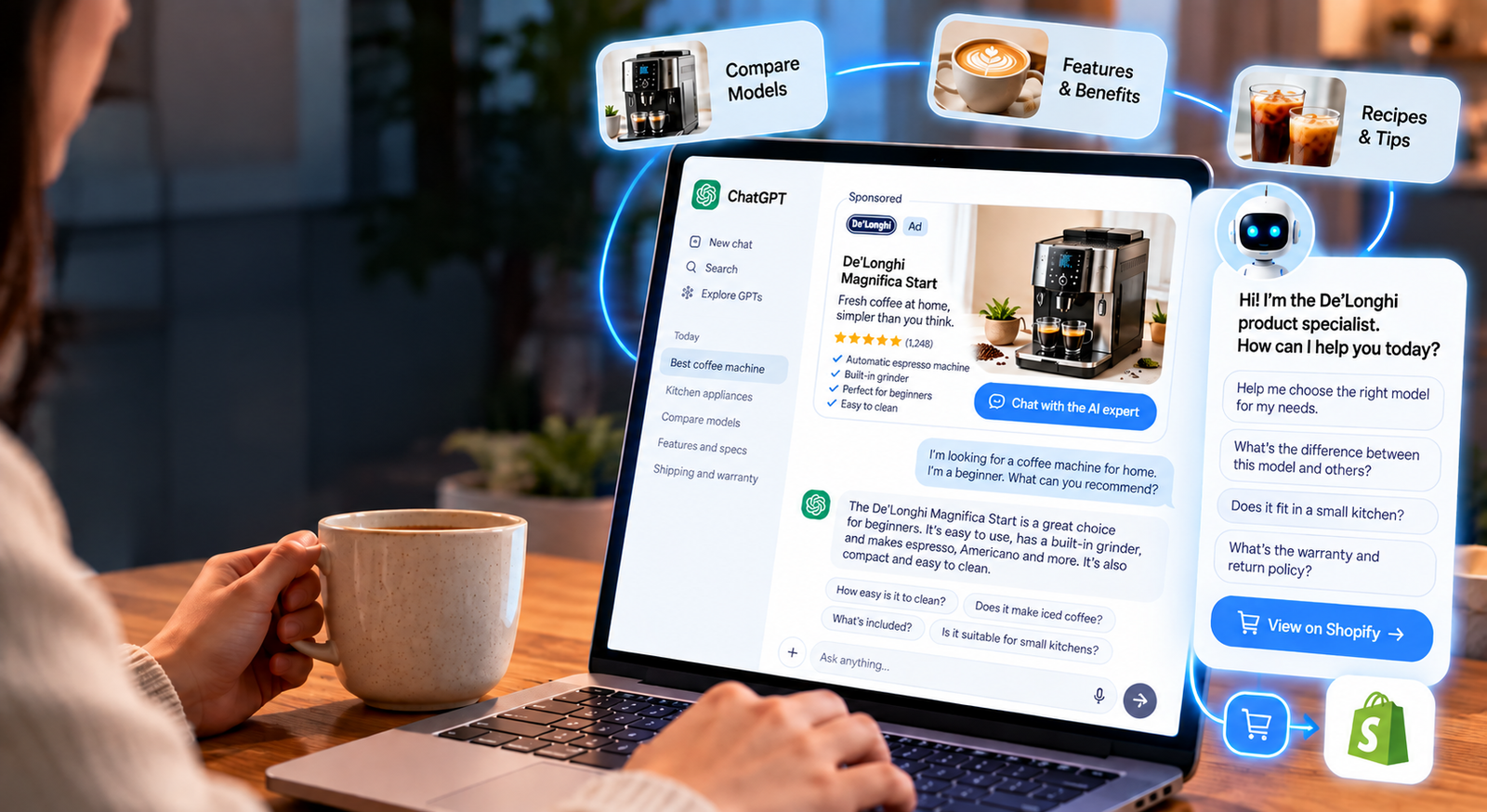
Imagine a shopper asking your ad whether that espresso machine fits under their kitchen cabinet, and getting a straight answer on the spot.
That scenario is closer than it sounds. For years, digital advertising has followed the same basic path: a customer sees an ad, clicks it, lands on a website, browses around, and decides whether to buy. OpenAI is now testing something different inside ChatGPT. It’s called Sponsored Agents, and it lets a shopper click an ad and then chat with an AI representative of that business. According to OpenAI, the format is in limited testing with selected advertisers in the U.S., so it isn’t something most stores can use yet. But it points to a bigger change worth understanding early.
From a message to a conversation
Think about how someone shops for a coffee machine today. They see an ad, click, land on a product page, and then go hunting for answers. Will it fit my counter? Can it make iced coffee? Is it hard to clean? Does it come with a grinder? Is it right for a beginner?
With a conversational ad, those questions get asked and answered right where the shopper first sees the product. OpenAI says the ads are clearly labelled, and that the sponsored conversation stays separate from ChatGPT’s own independent answers. The ad stops being just a message and starts acting more like a product specialist who’s always on shift.
Your product data now works for your advertising
Here’s where it gets practical for store owners. A traditional ad needs a headline, an image, an offer, and a button. A conversational agent needs far more than that. It needs to know what the product does, who it suits, what the specifications are, what’s in the box, what it works with, how it compares to other models, what the warranty and return policies say, and where its limits are.
If your product information is thin or inconsistent, that conversation falls flat. So a task many teams treat as background housekeeping, keeping clean product data, is turning into part of the advertising strategy itself. Your catalog isn’t only a list of inventory anymore. It’s the knowledge an AI would draw on to help sell your products.
The connection is already getting more direct. OpenAI has launched a ChatGPT Ads integration for Shopify that can sync a store’s catalog and inventory, and it uses a tracking pixel to measure results. Merchants can build product campaigns from that synced catalog instead of recreating product details by hand for every campaign. That means weak descriptions, wrong attributes, and missing specifications can follow you across several discovery and ad channels at once.
Intent is replacing keywords
Traditional search ads revolve around keywords. Someone types “best blender under $200” and advertisers bid on that phrase. Conversational AI gives you much richer context. A shopper might say they make smoothies every morning, their current blender struggles with frozen fruit, their kitchen is small, they don’t want something very loud, and they want to spend under $200.
That’s not really a keyword. It’s a full picture of what the customer needs. OpenAI’s own advertising guidance says relevance signals include conversational intent, and it recommends ads that are clear, specific, and focused on benefits, explaining who an offering is for and when it’s useful. For marketers, the thinking shifts from matching a keyword to an ad, toward understanding a customer’s situation, their need, and the evidence that your product fits.
Product pages need to work harder
Compare two ways of describing the same product. The first says “innovative technology, premium performance, designed for modern living.” It sounds polished, but it tells an AI almost nothing. The second says the product is designed for small kitchens, needs 40 cm of counter space, includes three accessories, and suits everyday family use. That gives a system something concrete to work with.
None of this means your pages should turn into dry spreadsheets. The best pages will keep the persuasive, human side for shoppers while adding clear, factual detail that machines can read.
A new kind of metric
Marketers usually watch impressions, clicks, click through rate, cost per click, conversions, and return on ad spend. Conversational advertising could add a layer around conversation quality. Businesses may eventually want to know how many people started a chat, what they asked, which concerns stopped them from buying, which products were compared most often, and which conversations led to a purchase.
That could be a goldmine. Imagine learning that hundreds of shoppers keep asking whether a product works in a small apartment, while your product page never answers that. Conversational ads could become a sales channel and a customer research tool at the same time.
Paid and organic AI visibility are different things
One point deserves extra care. Advertising inside ChatGPT does not mean paying to influence what ChatGPT recommends on its own. OpenAI says ads are labelled, operate separately from its answers, and that advertisers can’t pay to change the model’s independent responses.
So businesses may eventually need two strategies. Paid AI visibility means advertising to the right people inside AI environments. Organic AI visibility means making your products clear and credible enough that AI systems consider them on their own when answering shopping questions. Just as many businesses use both Google Ads and SEO today, they may end up using both AI advertising and AI recommendation optimization.
What to do now
Since Sponsored Agents are still in limited testing, there’s no need to rush. But you can prepare. Audit your product catalog and improve specifications and attributes. Write down the questions customers ask most often. Add clear comparison information, keep pricing and inventory accurate, and make your warranty, shipping, and return policies easy to understand.
Most of all, build a product knowledge base that can answer a few simple questions. What is it, and who is it for? What problem does it solve, and how is it different? What does it work with, what are its limits, and what happens after purchase? That same material can support your website, customer service, marketplace listings, and eventually conversational ads.
The bigger picture
Digital advertising has spent decades getting better at finding the right person. Conversational advertising adds the chance to actually talk with them once you do. The old question was how to get customers to click. The new one may be whether your business has enough information to answer when customers start talking to your ad.