AI shopping could alter marketplace advertising, but probably won’t eliminate it
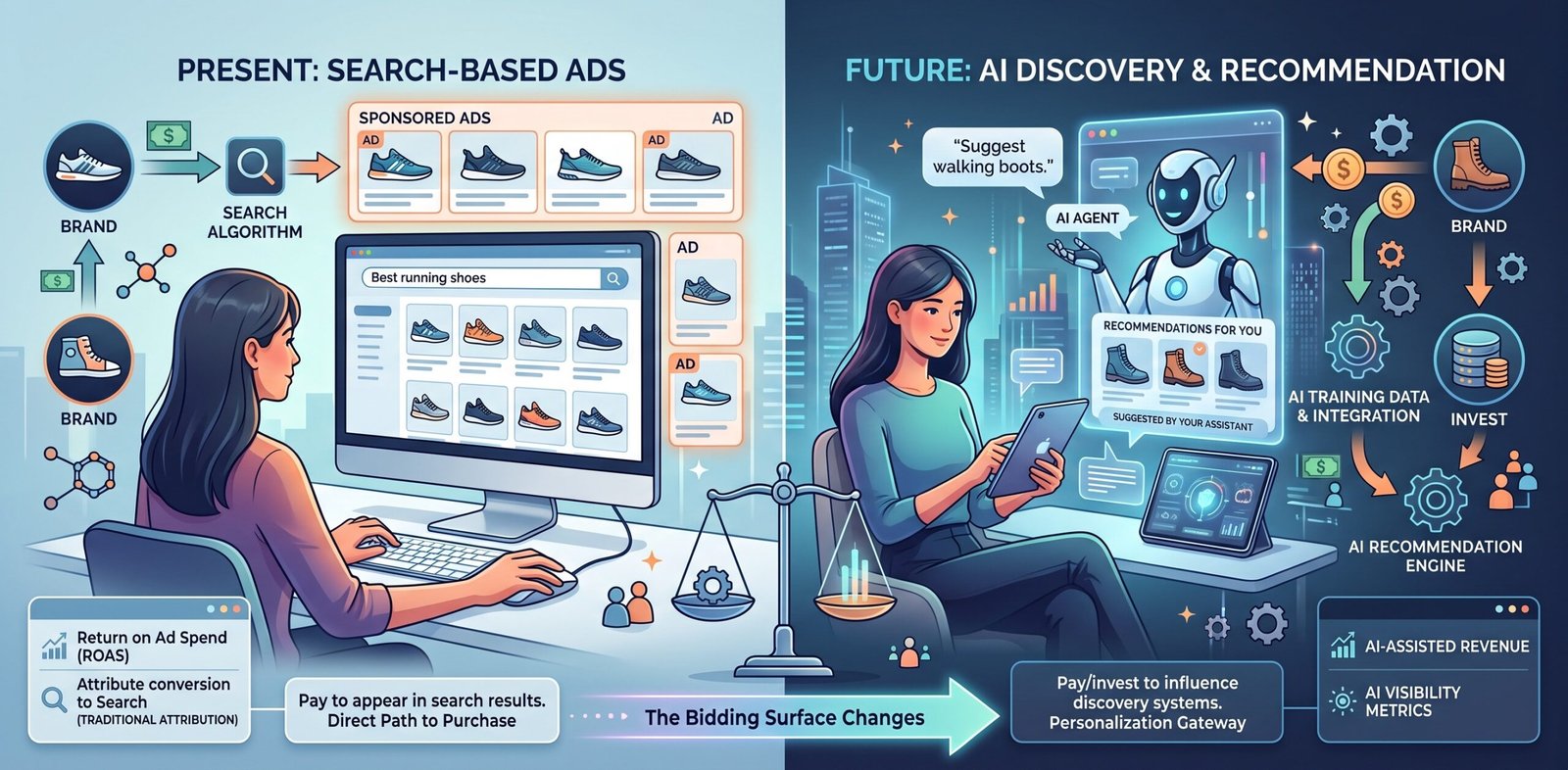
Every time a new shopping technology shows up, someone predicts it’s the end of advertising as we know it. It rarely is, and this time probably isn’t either.
AI shopping agents are shortening the gap between discovering a product and buying it, which has investors debating whether that threatens Amazon’s advertising business. Recent analysis from Rosenblatt argues the ad model is more resilient than feared, because brands will keep paying for visibility wherever product selection actually happens. That logic holds up. Advertising likely survives. What changes is where and how you pay for it.
Why Are Investors Worried About AI Shopping Agents and Advertising?
The concern is straightforward. Amazon’s advertising business is built on sponsored placements inside search results, a moment that has historically belonged to a human scrolling and clicking. If an AI agent increasingly handles that search and comparison step on the customer’s behalf, the thinking goes, there may be fewer human eyeballs scrolling past sponsored listings, and the whole model could weaken.
Will AI Agents Actually Eliminate Marketplace Advertising?
Probably not, and the reasoning behind that is worth sitting with rather than dismissing. Advertising exists because sellers need a way to influence which products get noticed when there are more options than any buyer, human or AI, can evaluate from scratch. That underlying need doesn’t disappear just because the entity doing the evaluating changes. Brands will still want visibility wherever product selection is actually happening. If that shifts from a search results page to an AI discovery or recommendation system, the money follows the attention, it doesn’t vanish.
So What Actually Changes?
The bidding surface changes. Today, paying for visibility mostly means bidding to appear in search results. Going forward, it increasingly means investing to influence the discovery systems and recommendation environments that AI agents rely on when narrowing a shopper’s options. The toll booth moves. It doesn’t close.
This matters because it reframes the right question for sellers. The question isn’t whether advertising will still work. It’s which systems you now need to show up well in, and what influencing those systems actually requires.
What Should Ecommerce Businesses Measure Going Forward?
This is where it gets practical. Traditional paid search attribution tells you how your ad spend converted inside a search results page. That metric still matters, but it’s no longer the whole picture. Two additional measurements are becoming worth tracking alongside it.
AI visibility asks whether your products actually show up when an AI shopping agent or assistant is narrowing options for a relevant customer need. This is closer to organic discoverability than paid placement, and it depends heavily on how complete and structured your product data is, not on a bid amount.
AI assisted revenue asks how much of your sales involved an AI system somewhere in the path, even if the final transaction happened through a traditional channel. A sale that closed through Google search may have actually been decided three steps earlier when an AI assistant recommended your product over a competitor’s. Standard last click attribution misses that entirely.
How Do You Start Tracking This Without Expensive Tools?
You don’t need a dedicated platform to begin. Run realistic customer questions through a few AI assistants regularly and record whether your products appear, which competitors show up instead, and what information seemed to drive the recommendation. Pair that with asking customers at checkout how they researched the purchase, since that will surface AI touchpoints your analytics can’t see on their own. Over time this builds a rough but genuinely useful picture of your AI visibility, separate from your paid search numbers.
Does This Mean You Should Pull Back on Paid Search?
No. Paid search still captures real demand, especially from shoppers who already know what they want and are searching directly. The point isn’t to abandon it. It’s to recognize that it’s now one input among several, sitting alongside AI visibility and AI assisted influence, rather than the entire story of how a sale happened.
Key Takeaways
The debate over whether AI shopping agents will gut Amazon’s ad business is really a debate about where attention lives, not whether advertising still works. History suggests advertising adapts to wherever decisions get made. The practical task for sellers isn’t worrying whether the ad model survives. It’s making sure they’re measuring and investing in both sides of it, the bidding surface that still exists and the AI visibility that’s quietly becoming just as important.
Side Note:
Will AI shopping agents eliminate the need for advertising?
Unlikely. Brands will still pay for visibility wherever product selection happens, whether that’s a search results page or an AI recommendation system.
What is AI assisted revenue?
It’s a way of measuring how much of your sales involved an AI system, like a shopping assistant or recommendation engine, somewhere in the customer’s path, even if the final purchase happened through another channel.
How is AI visibility different from paid search performance?
Paid search measures how your ad spend converts inside search results. AI visibility measures whether your products get surfaced and recommended by AI systems independent of any bid, which depends mainly on product data quality.
Should sellers stop investing in traditional marketplace ads?
No. Traditional paid search still captures real, high intent demand. It should be measured alongside AI visibility, not replaced by it.