Canadian Shoppers Aren’t Cutting Back. They’re Trading Down. Here’s the Pricing Strategy That Matches That
Canadians haven’t stopped spending this year, they’ve just gotten a lot more deliberate about where the money goes.
Canadian consumer spending data throughout 2026 shows selectivity, not collapse, a pattern that lines up with U.S. holiday forecasts pointing toward heavy value seeking behavior this season. Rather than responding with a single product and a discount, Canadian retailers should build a Good, Better, Best pricing tier for key products. This lets price sensitive shoppers trade down to a lower tier without leaving the brand or the store entirely.
Is Canadian Consumer Spending Actually Slowing Down?
Not really, it’s shifting shape. Several independent data sources through 2026 point to the same pattern. Moneris, which processes roughly one in three transactions in Canada, found total spending in the first quarter down just 0.27% year over year, essentially flat, while average transaction size ticked up slightly. RBC’s Consumer Spending Tracker found core retail sales, excluding gas and autos, up a modest 0.5% on a three month average through June, describing the trend as a hold rather than a rebound. Retail Insider’s quarterly coverage has consistently described the Canadian consumer as cautious and increasingly selective rather than retreating. The throughline across all of this is the same: Canadians are still spending, just more carefully and more selectively.
How Does This Connect to the U.S. Holiday Forecast?
Adobe’s 2026 U.S. holiday forecast projects $275.1 billion in online sales for November and December, and Reuters’ coverage of that forecast ties much of the growth directly to discount driven, value seeking shopper behavior. Canadian retailers don’t operate in a separate universe. With a similar selective, value conscious consumer already showing up in domestic data, it’s reasonable to expect the same instinct to carry into the Canadian holiday season, even without an identical spending slowdown.
Why Doesn’t One Product and a Discount Work as Well Anymore?
Because a single price point gives a hesitant shopper exactly one decision to make: buy it at this price, or walk away. When a customer facing that one price feels unsure, the easiest outcome is often to leave without buying anything at all, and your discount just erodes your margin on the sales you were already going to make. A single SKU and discount structure doesn’t give price sensitive shoppers anywhere to go within your brand.
What Does a Good, Better, Best Structure Actually Look Like?
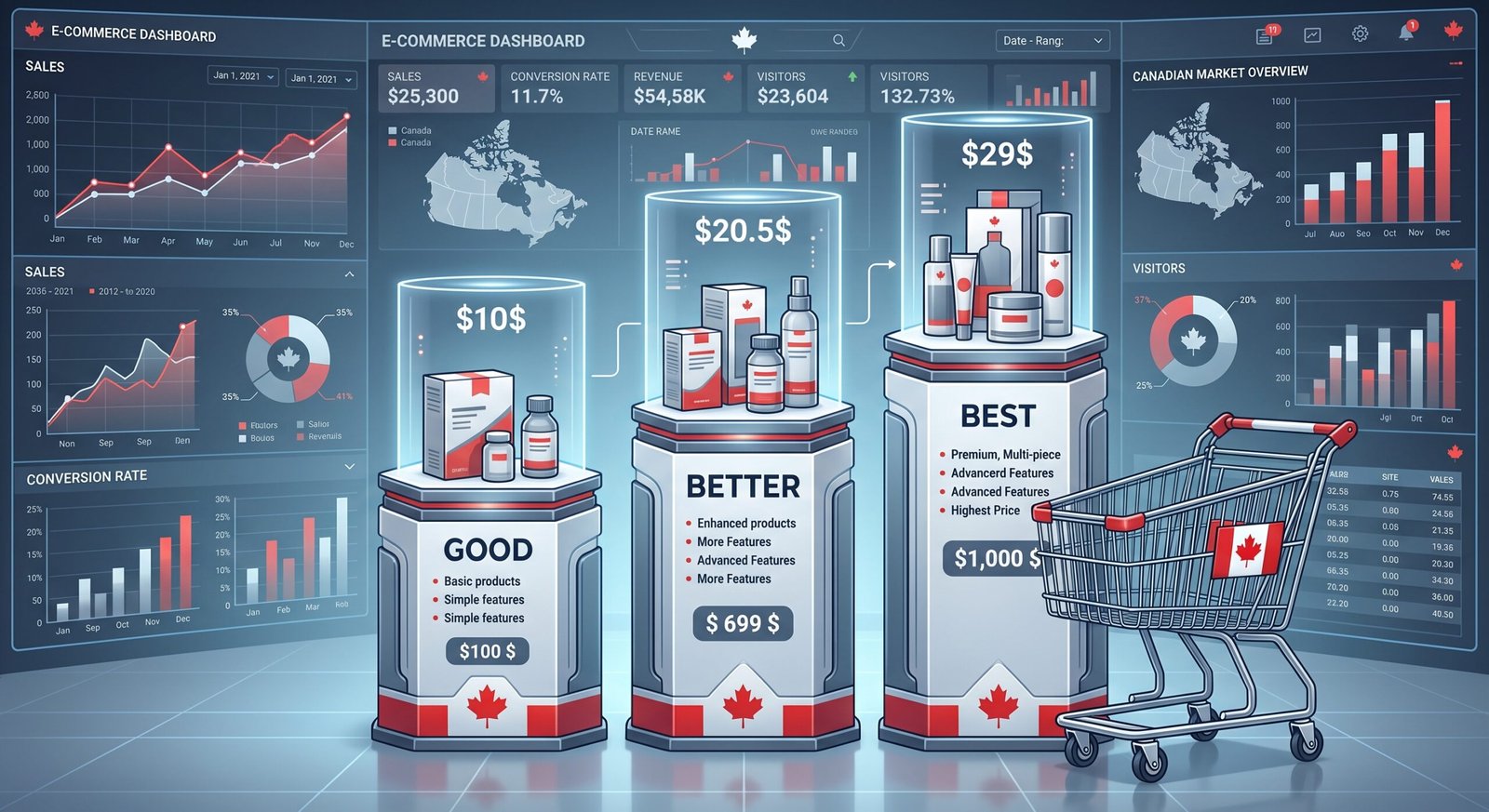
The idea is to offer three tiers of the same core product line rather than one product with a markdown. A practical example might look like this:
Good, priced around $299, covers the essential features a customer needs to solve their core problem, with nothing extra.
Better, priced around $449, adds stronger performance and meaningful convenience features that a more engaged shopper will value.
Best, priced around $699, delivers premium performance, stronger design, and extended warranty coverage for the shopper who wants the complete package.
A customer who can’t justify $699 this year doesn’t have to leave to find a cheaper alternative elsewhere. They can step down to $449 or $299 and stay inside your brand, which protects both the sale and the relationship.
Why Does This Work Better Than a Blanket Discount?
A blanket discount cuts your margin on every customer, including the ones who were always going to buy at full price. A tiered structure instead lets price sensitive shoppers self select into a lower price point while your margin stays protected on the tiers above it. It also reframes the purchase decision from whether to buy at all into which version to buy, which is a much easier decision for a cautious shopper to make.
How Should Retailers Decide What Goes in Each Tier?
Start with your actual customer data rather than guessing. Look at what your most price sensitive customers have historically bought versus your highest spending customers, and build the Good tier around what the first group already values and the Best tier around what the second group already pays for. The Better tier should sit as a genuine middle ground rather than a token option, since it often becomes the tier most shoppers land on once given a real choice.
Does This Apply to Every Product Category?
It works best for products where features and performance genuinely scale, such as appliances, electronics, furniture, and similar considered purchases. It’s less natural for commodity items where there’s little meaningful difference between versions. For your core, higher consideration SKUs heading into the holidays, though, a tiered structure is usually a stronger response to a cautious market than simply discounting your one existing option.
Key Takeaways
Canadian shoppers heading into this holiday season aren’t pulling back, they’re being more deliberate about where their money goes, and U.S. forecasts suggest the same value seeking instinct will shape the broader holiday mood. A single product with a discount gives a cautious shopper one decision, buy or walk away. A Good, Better, Best structure gives them a reason to stay and choose a version that fits their budget, which is a far stronger position for any retailer heading into Q4.
Side Note:
Is Canadian consumer spending declining in 2026?
Multiple data sources, including Moneris and RBC, show spending holding roughly flat rather than declining, with consumers becoming more selective rather than cutting back broadly.
What is Good, Better, Best pricing?
It’s a merchandising structure offering three tiers of the same product line at different price and feature levels, letting price sensitive shoppers trade down without leaving the brand.
Why is this better than a holiday discount?
A single discount reduces margin on every sale, including ones that would have happened anyway. A tiered structure protects margin on higher tiers while still giving cautious shoppers an affordable option.
Which products work best for this pricing structure?
Products where features and performance scale meaningfully, such as appliances, electronics, and furniture, tend to work better than commodity items with little differentiation.