AI Shopping Agents Are Here. Is Your E-Commerce Store Ready for the Liability?
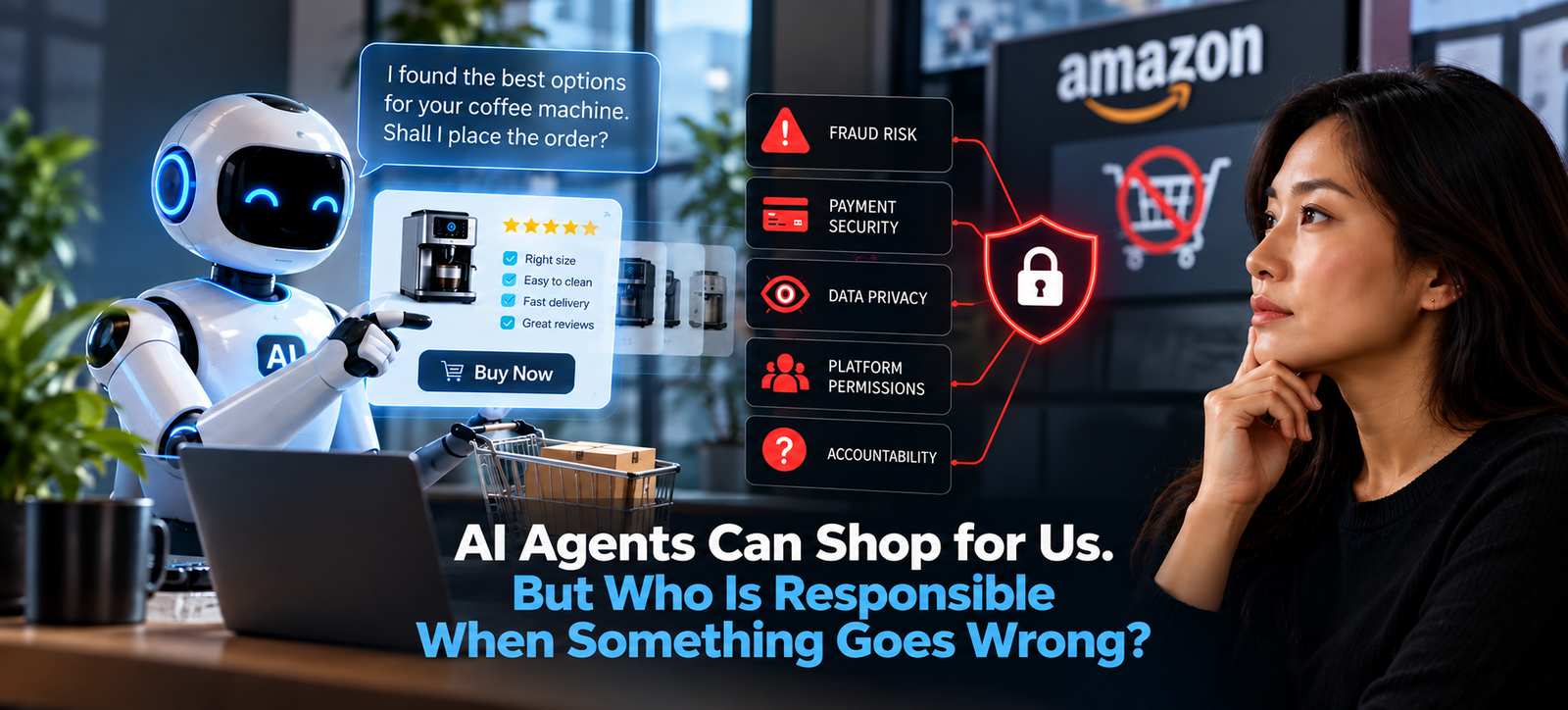
For the past year, “agentic commerce” has been one of the buzziest ideas in online retail.
Instead of a customer scrolling through search results, comparing specs, and clicking through checkout, an AI agent does it for them — searching, comparing, recommending, and sometimes even completing the purchase on their behalf.
It sounds like a win for everyone. Customers save time, and merchants get a new, highly efficient sales channel. But recent developments are exposing a much messier reality, which is, every e-commerce business owner needs to understand before AI agents start showing up in their checkout funnel.
From “Can It?” to “Should It Be Allowed To?”
The real shift with agentic commerce isn’t that AI can browse and recommend, it’s that AI can now act: logging into accounts, selecting products, entering payment details, and completing transactions without a human clicking “buy.”
That distinction matters enormously for merchants. This month, Amazon blocked Meta’s “Muse” AI shopping agent from operating on its platform, citing concerns about transparency, authorization, and data security. The message was clear: just because an AI agent is technically capable of navigating your site doesn’t mean it has permission to. Merchants, not the AI vendors, may increasingly get to decide which agents can access their storefronts and what those agents are allowed to do.
At the same time, a coalition of major banks, including Bank of America, Capital One, ING, NatWest, and others, publicly warned that agentic shopping is outpacing existing consumer protection standards. Their concern: agents could buy the wrong product, overspend, mishandle sensitive financial data, or push customers toward less secure payment methods. They’re calling for clearer disclosure whenever an AI is doing the buying, along with stronger data safeguards.
Why This Matters to Your Store, Not Just Big Platforms
It’s easy to assume this is an “Amazon and Meta problem.” It isn’t. If your store accepts traffic and transactions from AI agents, whether through a partner integration, a payment processor’s new “agentic checkout” feature, or simply because a shopping assistant is scraping your product pages, you inherit the same questions the banks and Amazon are wrestling with:
- Who is actually the customer? Fraud and authentication systems built for human shoppers weren’t designed to verify whether an AI agent is legitimately acting on a real customer’s behalf.
- Who’s liable when something goes wrong? If an agent buys the wrong size, misreads a return policy, or gets tricked into overpaying, your business may still be the one fielding the chargeback or the angry customer.
- What data are you exposing? Agents often need account access or scraped product/pricing data to function, the data you may not have intended to share so freely.
None of this means AI agents are bad news. Payment networks like Mastercard and Visa, along with processors like Adyen, are actively building infrastructure including identity verification, transaction limits, and agent authorization protocols to make agentic commerce safer. The opportunity is real. But the businesses that benefit will be the ones that engage deliberately, not the ones that let it happen by accident.
What E-Commerce Owners Should Do Now
So now, you may want to build your own AI assessment agent today. But you do need a plan. Here’s where to start:
1. Audit who’s already touching your store. Check your analytics and server logs for bot and agent traffic. Are shopping assistants already browsing or scraping your catalog? You may be part of the agentic economy before you’ve made a single decision about it.
2. Set an explicit access policy. Decide, in writing, which third-party AI agents (if any) are authorized to interact with your site or app, and update your terms of service and robots.txt accordingly. Silence isn’t a strategy, it’s a vulnerability.
3. Review your payment and fraud settings. Talk to your payment processor about how they detect and handle agent initiated transactions, and whether extra verification steps are available for high risk purchases.
4. Apply the “new employee” test to any AI you deploy. If you’re using AI for customer service, pricing, or marketing, don’t hand over full access by default. Define clearly what it can see, what it can change, what it can spend, and what needs human approval that with an audit trail and a way to reverse mistakes.
5. Get ahead of disclosure expectations. Regulators and banks are already pushing for clearer labeling of AI-driven transactions. Building transparency into your checkout now, rather than retrofitting it under pressure later, to protects both your customers and your brand.
Key Takeaways
Agentic commerce isn’t a distant trend, it’s unfolding in real time, and the rules are being written by the platforms, banks, and processors moving fastest. E-commerce businesses that wait to react will be stuck adapting to standards set by others. Those that start asking the right questions now, about access, authorization, and accountability, will be positioned to turn AI agents into a genuine advantage instead of a liability.
If you’d like help auditing your store’s exposure to AI agent traffic or building a governance plan around AI tools in your marketing and checkout stack, that’s exactly the kind of strategic work our team can walk through with you.