Bundle or Single Product? How to Show Better Value Without Just Discounting
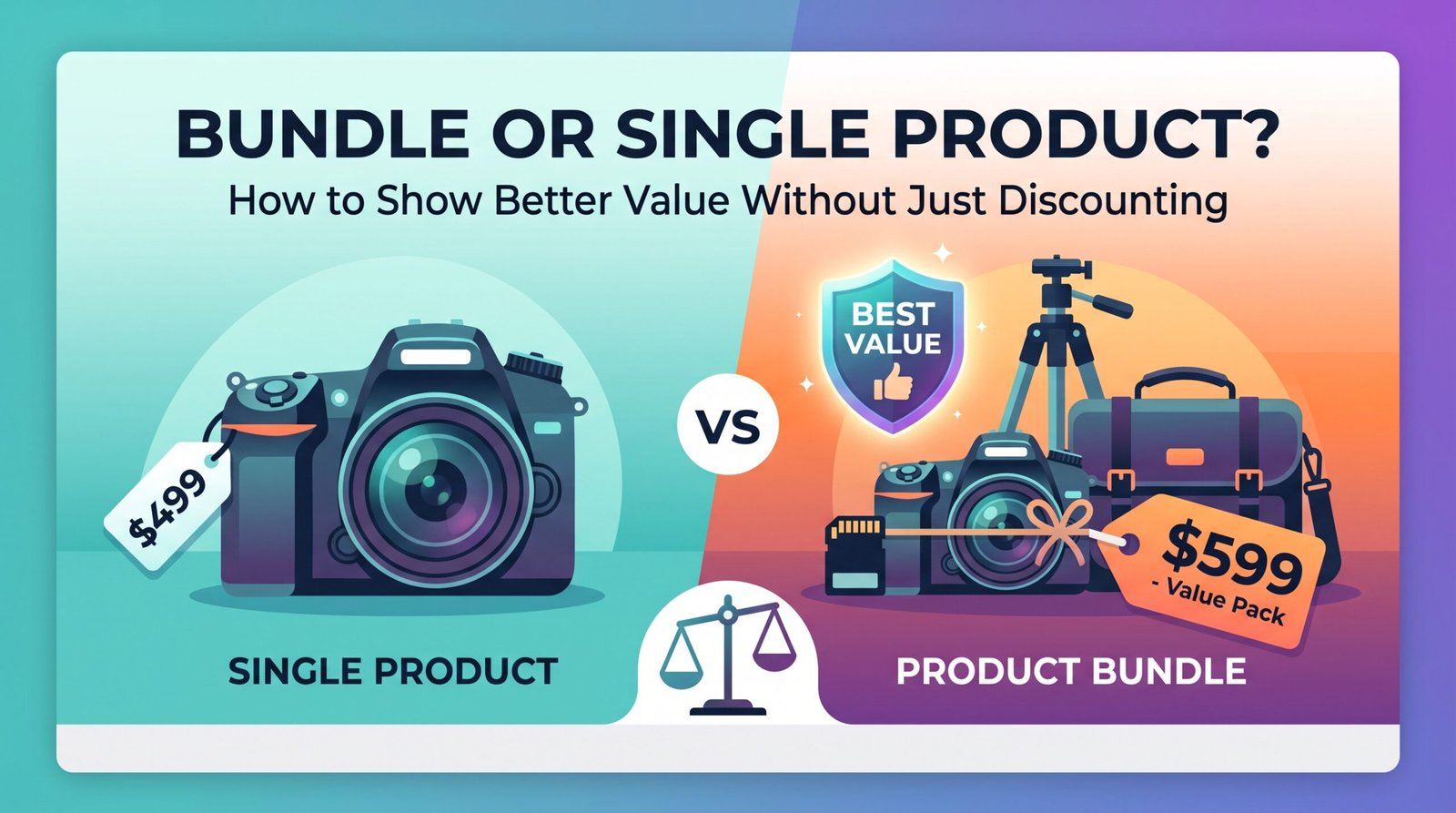
A customer may come for one product, but the right bundle can help them see the full solution.
For many e-commerce businesses, especially those selling small appliances, kitchen tools, home goods, accessories, or giftable products, one common question is:
Should we sell products individually, or create bundles?
Both options can work. A single product is simple, easy to compare, and often better for customers who already know exactly what they want. A bundle can increase order value, improve convenience, and help customers feel they are getting a more complete solution.
But a bundle is not automatically better.
A good bundle creates value. A weak bundle feels like a forced upsell.
The goal is not simply to put random products together and call it a deal. The goal is to help customers solve a bigger problem than one product can solve alone.
The Strength of a Single Product
A single product works best when the customer already understands the item and wants to compare it clearly.
For example, a shopper may search for a compact appliance, a kitchen tool, a replacement accessory, or a specific product type. They want to know the price, features, size, warranty, shipping time, and reviews.
A single-product page keeps the decision simple.
The customer can ask:
Is this the right product for me?
There is less complexity. The price is easier to understand. The product is easier to compare against competitors. It may also perform better on marketplaces where shoppers are filtering by price, rating, delivery speed, or specific features.
Single products are especially useful when:
- customers are price-sensitive
- the item is easy to understand
- the product is already in demand
- the buyer only needs one thing
- marketplace comparison is important
- the product is an entry point into the brand
The downside is that a single product may limit average order value. It may also miss the opportunity to help customers buy the related items they will likely need next.
A single product can get the sale. A bundle can sometimes complete the solution.
The Strength of a Bundle
A bundle works best when the customer has a broader goal.
Instead of selling one item, the business sells a use case.
For example:
“Meal prep starter set”
“Small kitchen cooking kit”
“Home café setup”
“Baking essentials bundle”
“New apartment kitchen bundle”
“Gift-ready cooking set”
The customer is not only buying products. They are buying convenience, confidence, and a clearer path to the result they want.
This is where bundles become powerful.
A strong bundle can:
- increase average order value
- simplify decision-making
- introduce accessories or add-ons
- reduce the need for multiple separate purchases
- improve perceived value
- support seasonal promotions
- create better gift options
- help slower-moving products sell with stronger products
For small appliances, bundles can work particularly well when the products naturally belong together.
For example:
A compact cooking appliance plus compatible accessories.
A beverage appliance plus serving or cleaning items.
A food-prep item plus storage or preparation tools.
A baking product plus decorating or measuring accessories.
The best bundles feel useful before the customer calculates the discount.
The Risk of Bad Bundles
Not every bundle adds value.
Some bundles feel like the business is simply trying to clear old inventory.
Customers can sense that.
A weak bundle often includes items that do not naturally fit together, adds products the customer does not need, or creates a price that feels confusing.
For example, a bundle may fail when:
- the included items are unrelated
- the price saving is unclear
- the customer only wants the main item
- the bundle includes low-value accessories
- the product page does not explain the use case
- the bundle is harder to compare than the single product
- shipping cost increases too much
- returns become more complicated
A bundle should not create friction.
It should make the buying decision easier.
Which Gives Better Value?
The answer depends on what “value” means.
For the customer, value may mean:
- lower total price
- convenience
- confidence
- fewer decisions
- a more complete setup
- better gifting experience
- everything needed in one purchase
For the business, value may mean:
- higher average order value
- stronger margin
- better inventory movement
- lower customer acquisition cost per item
- better seasonal merchandising
- more differentiated offer
A bundle gives better value when both sides benefit.
The customer should feel:
“This makes my life easier.”
The business should see:
“This improves order value or profitability without damaging margin.”
A bundle is not valuable just because it is bigger. It is valuable when it is more useful.
How to Decide What to Sell as a Bundle
A good bundle starts with the customer’s situation, not the warehouse.
Ask:
What is the customer trying to accomplish?
What products are commonly used together?
What questions does the customer ask before buying?
What accessory improves the main product experience?
What would make this a better gift?
What would reduce the chance of the customer buying the wrong item?
What products have healthy margin and natural connection?
Then build bundles around customer missions.
For example:
Small-space living
Products that help someone cook or organize in a limited kitchen.
Back-to-routine meal prep
Products that help customers save time during busy weekdays.
Home entertaining
Products that support hosting, serving, or preparation.
Gift-ready sets
Products packaged around occasions such as housewarming, weddings, holidays, or birthdays.
This approach creates a stronger offer than simply saying:
“Buy these three items together.”
Bundle Strategy Should Not Depend Only on Discounts
Many businesses think bundles need a large discount to work.
Not always.
A bundle can create value through:
- convenience
- exclusive combination
- free accessory
- improved packaging
- seasonal theme
- gift-ready presentation
- clear use case
- limited-time offer
- easier product selection
Discounts can help, but they should not be the only reason the bundle exists.
A better bundle message is:
“Everything you need to get started.”
Not only:
“Save 15%.”
That matters because constant discounting can train customers to wait for sales. A useful bundle can protect value while still giving customers a reason to buy more.
The Best Strategy Is Usually Both
Most e-commerce businesses should not choose only single products or only bundles.
They should use both with clear roles.
Single products are useful for search, comparison, entry-level purchases, marketplaces, and customers who know exactly what they want.
Bundles are useful for seasonal campaigns, gift guides, higher order value, customer education, and solution-based merchandising.
A strong product strategy might look like this:
Single product page
Clear information, specifications, reviews, images, FAQs, and comparison points.
Bundle offer
Shown as a related option for customers who want a more complete solution.
Collection page
Organized by customer use case, not only product type.
Email and social content
Focused on the problem the bundle solves.
This gives customers choice without forcing them into a larger purchase.
Key Takeaways
A single product sells the item.
A good bundle sells the solution.
For small-appliance and product-based e-commerce businesses, bundles can be a powerful way to increase order value, improve customer experience, and create more interesting seasonal offers. But the bundle must make sense.
Do not bundle products just because they are sitting in inventory.
Bundle products because they help the customer accomplish something more easily.
The better question is not:
“Can we sell more items together?”
The better question is:
“What complete solution would make the customer feel more confident buying today?”
When a bundle answers that question clearly, it does more than increase the cart size.
It creates better value for the customer and a stronger business result for the seller.