E-commerce Isn’t the Future of Retail — It’s Already Here
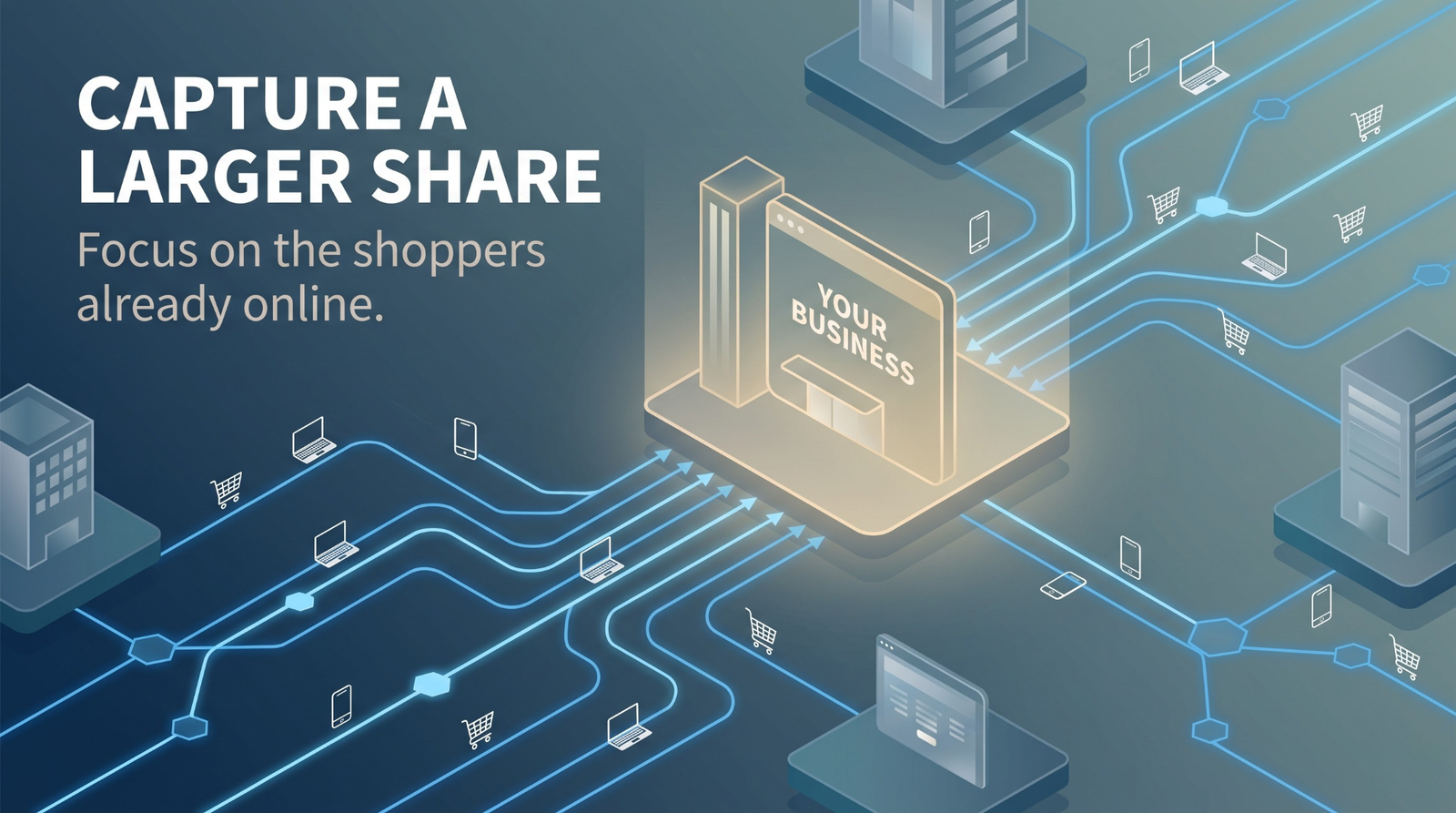
Canada’s latest retail data offers an important signal for businesses: consumer spending is still moving, but where and how that spending happens continues to evolve.
According to Statistics Canada, total retail sales increased 0.6% month-over-month in June, reaching C$74.3 billion.
That is a healthy increase.
But one number stands out even more.
Retail e-commerce sales increased 9.9% to C$5.7 billion, representing 7.7% of total retail trade.
One month does not define a long-term trend. But a gap of this size between overall retail growth and e-commerce growth is difficult to ignore.
In Toronto, retail sales increased 3.9% in June, further reinforcing that consumers are still spending, particularly in major urban markets.
At the same time, businesses should be careful not to assume that June’s momentum will continue in a straight line.
Statistics Canada’s preliminary estimate suggests that total retail sales may have declined 0.8% in July.
That combination tells us something important.
Consumer demand is not disappearing. It is becoming more fluid.
Customers move between search engines, marketplaces, social platforms, brand websites and physical stores before making a purchasing decision. Increasingly, the buying journey starts digitally, often well before a customer interacts directly with a business.
For retailers and e-commerce brands, this changes the strategic question.
It is no longer simply:
“How do we get more traffic?”
A better question is:
“How much of the existing demand are we failing to capture?”
A potential customer may already be searching for the product you sell.
They may already be comparing alternatives.
They may already have purchase intent.
But if your website is difficult to navigate, your product pages do not answer their questions, your marketplace listings lack visibility, your Google presence is weak, or your brand provides little reason to choose you over a competitor, that demand simply moves somewhere else.
This is why digital presence should no longer be treated as a collection of separate marketing activities.
Your website, search visibility, marketplace presence, social content, product information and conversion experience increasingly operate as retail infrastructure.
The objective is not to be everywhere for the sake of being everywhere.
It is to make sure that when customers are ready to discover, compare and buy, your business is positioned to capture that demand.
The latest retail numbers are another reminder that e-commerce is not an emerging channel waiting for businesses to prepare for it.
It is already part of how Canadian consumers shop.
The strategic advantage now belongs to businesses that can turn that behaviour into measurable market share.